Society Maintenance Charges Guide for Apartment Buyers in Sarjapur Road 2026
Maintenance charge figures and GST thresholds quoted here are indicative for 2026. Actual rates vary by project, RWA decision and Karnataka rules - verify with the developer and your tax advisor before signing.
The quoted price of an apartment on Sarjapur Road covers the unit and its undivided share of land. What it does not cover - and what many first-time buyers overlook - is the monthly cost of maintaining the common areas, amenities, security and utilities of the gated community after possession. Society maintenance charges are a permanent, recurring outgo that adds meaningfully to your monthly cost of ownership. Understanding how they are calculated, what they cover, when they increase, and what one-time amounts are payable at possession helps you budget the full cost of an apartment before booking, not after.
What Maintenance Charges Cover
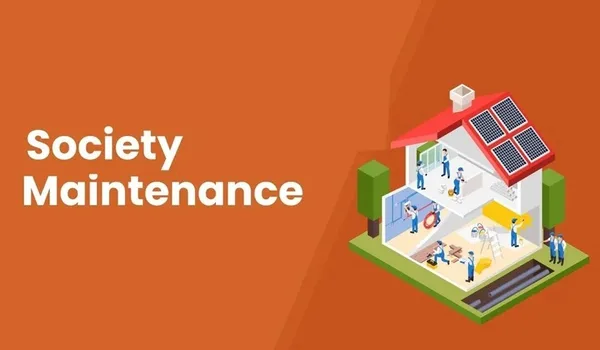
Monthly maintenance charges in a gated community on Sarjapur Road typically fund all of the following:
- Security staff: 24/7 gate security, CCTV monitoring and access control systems
- Common area housekeeping: Lobby cleaning, corridor cleaning, lift interiors, parking areas
- Landscaping and gardens: Watering, mowing, gardening staff, plant replacement
- Lift maintenance: Annual maintenance contract (AMC) for all lifts, including emergency call-out
- Common area power: Electricity for lobbies, corridors, external lighting, pumps, security systems
- Water and STP: Water supply operations, sewage treatment plant operation and maintenance
- Amenities operation: Swimming pool chemicals, gym equipment maintenance, clubhouse operations
- Administration: RWA office costs, accounting, management software, annual audit
- DG power: Diesel generator fuel and maintenance for common area power backup
Individual unit costs - electricity consumption, piped gas, internet, water consumed within the flat - are billed directly and are separate from maintenance charges.
How Monthly Maintenance Is Calculated
In most Bengaluru gated communities, maintenance is charged on a per-square-foot-of-super-built-up-area (SBA) per month basis. This is a simple, transparent formula: your monthly maintenance = maintenance rate per sq ft × your unit’s SBA.
| Maintenance Rate (per sq ft SBA) | 1,200 sq ft Unit | 1,500 sq ft Unit | 2,000 sq ft Unit |
|---|---|---|---|
| ₹2.50 / sq ft | ₹3,000/mo | ₹3,750/mo | ₹5,000/mo |
| ₹3.50 / sq ft | ₹4,200/mo | ₹5,250/mo | ₹7,000/mo |
| ₹5.00 / sq ft | ₹6,000/mo | ₹7,500/mo | ₹10,000/mo |
Indicative 2026 ranges for Sarjapur Road gated communities. Premium projects with large amenity spaces and higher staffing costs tend toward Rs 4-5 per sq ft.
Some projects use a flat per-unit rate (equal regardless of unit size) or a hybrid (base rate per unit + variable per sq ft top-up). Check the payment schedule in the sale agreement to confirm which formula your project uses. Per-sq-ft is the most common and most equitable model.
One-Time Amounts at Possession
In addition to the monthly maintenance, two one-time amounts are typically collected by the builder at or before possession:
1. Corpus Fund (Sinking Fund)
The corpus fund is a one-time, non-refundable deposit that seeds the RWA’s reserve for long-term capital expenditure - roof waterproofing, lift replacement, pump overhaul, repainting of external facades, major structural repairs. It is deposited into a fixed account managed by the RWA and is not used for day-to-day running costs. The corpus fund is non-refundable even if you sell the apartment - it stays with the property and benefits the next owner too.
In Bengaluru, corpus funds in 2026 typically range from ₹50,000 to ₹1,50,000 per unit depending on project size, amenity level and builder policy. For a premium gated community on Sarjapur Road, a corpus of ₹1-1.5 lakh is common. Verify the exact amount in the payment schedule of your sale agreement before signing.
2. Advance Maintenance Deposit
Builders typically collect 12 to 24 months of maintenance in advance at the time of possession. This advance funds operations during the builder-maintained period - the gap between the first possession and the formal constitution and handover to the Resident Welfare Association (RWA). The advance is held in an account and applied month by month against your maintenance dues; it is not a deposit and is generally not refundable on resale.
The Builder-Maintained Period
After the first possessions are handed over, the builder typically maintains the common areas and amenities directly until enough residents have moved in to justify forming an RWA. This period - the builder-maintained period - commonly lasts one to three years for large projects. During this time:
- The builder (or a facility management company appointed by the builder) runs day-to-day maintenance
- Residents pay maintenance at the rate fixed in the agreement (funded from the advance collected at possession)
- Major decisions on common areas are still largely controlled by the builder
- RERA requires builders to hand over maintenance to an association of apartment owners within a specified period
Under Karnataka’s Karnataka Apartment Ownership Act (KAOA) and RERA, builders are required to constitute an Apartment Owners Association (AOA) or hand over to one within a reasonable period of handing over possession of the majority of units. Residents can push for this handover if the builder delays it.
What Changes When the RWA Takes Over
Once the RWA is constituted and the builder hands over the common areas and maintenance corpus:
- The RWA sets maintenance rates based on actual operating costs, voted on at the Annual General Meeting (AGM)
- Maintenance rates may increase or decrease from the builder’s initial rate depending on actual costs and efficiency of the RWA
- Residents elect a managing committee that controls vendor contracts, common area decisions and spending above a threshold
- The corpus fund is transferred to the RWA’s account and can only be used for capital expenditure
- An annual audit of RWA accounts becomes mandatory under KAOA
In well-managed communities, RWA takeover often improves transparency and reduces the risk of excess charges. However, in large projects where many units remain unsold or unoccupied, the maintenance burden per occupied unit can be higher in the early years until the project fills up.
GST on Maintenance Charges
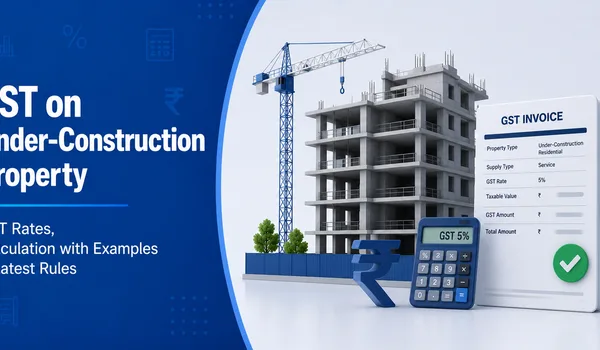
An important and often overlooked cost: GST applies to maintenance charges in certain cases. As of 2026:
| Condition | GST Applicable? | Rate |
|---|---|---|
| Monthly maintenance ≤ ₹7,500 per unit AND RWA turnover ≤ ₹20 lakh/year | No | Nil |
| Monthly maintenance > ₹7,500 per unit (any turnover) | Yes - on full amount | 18% |
| RWA annual turnover > ₹20 lakh AND maintenance ≤ ₹7,500 | Yes - on full amount | 18% |
This means that on a 2,000 sq ft apartment at ₹5 per sq ft, the monthly maintenance is ₹10,000 - above the ₹7,500 threshold, attracting 18% GST on the full ₹10,000, adding ₹1,800 per month. Your effective maintenance outgo becomes ₹11,800 per month. Budget the GST component when estimating total monthly costs for larger or premium units.
Sinking Fund vs Corpus Fund
The terms are sometimes used interchangeably but refer to slightly different things. The corpus fund is a one-time upfront amount collected at possession to seed the reserve. The sinking fund is a monthly contribution included in the maintenance charge (or separately itemised) that replenishes the reserve over time for future capital expenditure. A well-managed RWA maintains both: the initial corpus for early years and a sinking fund contribution to keep the reserve growing as the building ages.
When evaluating a resale apartment, ask to see the RWA’s balance sheet - the size of the sinking fund relative to the building’s age tells you whether the community is financially prepared for major maintenance costs or whether a special levy (one-time extra charge to all residents) is likely in the near future.
What to Check in the Sale Agreement
- Maintenance rate at handover: The rate per sq ft (or per unit) that the builder will charge during the builder-maintained period
- Corpus fund amount: The exact amount and whether it is separate from advance maintenance
- Advance maintenance duration: Whether 12 or 24 months is collected; what happens to unused balance if you receive possession late
- Services included: What is covered in the maintenance rate - ask for a written list if it is not in the agreement
- Escalation clause: Whether the builder can revise maintenance rates during the builder-maintained period and by what mechanism
- Handover timeline: When and under what conditions the builder will hand over maintenance to the RWA
Estimating Your Total Monthly Outgo
A realistic monthly budget for a 1,500 sq ft apartment in a premium gated community on Sarjapur Road in 2026 typically looks like this:
| Item | Estimated Monthly Amount |
|---|---|
| Home loan EMI (₹1.1 crore at 8.75% / 20 yr) | ~₹97,000 |
| Society maintenance (₹3.50/sq ft × 1,500) | ₹5,250 |
| GST on maintenance (if >₹7,500 threshold not triggered) | Nil |
| Electricity (unit consumption + DG backup if needed) | ₹3,000-5,000 |
| Piped gas / cooking fuel | ₹500-1,000 |
| Internet + OTT | ₹1,000-1,500 |
| Total estimated monthly outgo | ~₹1,06,750-1,09,750 |
Indicative figures based on typical 2026 rates. EMI assumes a loan of ₹1.1 crore (75% LTV on ₹1.47 crore apartment). Actual maintenance rate and utilities vary by project and usage.
Frequently Asked Questions
1.What is the typical monthly maintenance charge for an apartment in Sarjapur Road 2026?
Typically Rs 2.50 to Rs 5 per sq ft of SBA per month - a 1,500 sq ft apartment pays Rs 3,750-7,500/month. Premium projects with large amenity spaces are at the top of this range.
2.What is a corpus fund in an apartment purchase?
A one-time, non-refundable deposit paid at possession to seed the RWA’s long-term maintenance reserve. It typically ranges from Rs 50,000 to Rs 1,50,000 per unit in Sarjapur Road projects.
3.What is advance maintenance charge and when is it paid?
12-24 months of maintenance collected by the builder at possession to fund operations during the builder-maintained period. It is applied month by month against your dues.
4.Is GST applicable on society maintenance charges?
Yes - 18% GST applies if your monthly maintenance exceeds Rs 7,500 per unit (charged on the full amount, not just the excess). RWAs with annual turnover above Rs 20 lakh must collect GST regardless of per-unit amount.
5.What happens to maintenance charges after the RWA takes over from the builder?
The RWA sets rates based on actual costs voted on at the AGM - rates may rise or fall from the builder’s initial rate. Residents gain direct control over vendor contracts and spending decisions.
Conclusion
Society maintenance charges are a significant and permanent component of the cost of apartment ownership that the headline price does not capture. On a 1,500 sq ft apartment in a Sarjapur Road gated community, monthly maintenance plus utilities typically adds ₹8,000-15,000 to your monthly outgo over and above the home loan EMI. At possession, the corpus fund and advance maintenance add another ₹1.5-2.5 lakh in one-time payments. Both are legitimate and necessary costs for the shared infrastructure that makes gated community living work - but they need to be budgeted before you commit, not discovered after. Read the maintenance schedule in your sale agreement, check what is included, verify whether GST applies to your unit, and factor the full monthly number into your home loan repayment assessment. For current unit sizes and pricing at Godrej Verano, visit the price page or speak to the team to get a complete payment schedule before booking.
More From the Blog